
NXP PEMD3: The Next Generation of High-Efficiency Power Management for Advanced Automotive and Industrial Systems
The relentless drive toward greater electrification in automotive and industrial applications demands power management solutions that are not only more efficient but also smarter, more integrated, and incredibly robust. Addressing this critical need, NXP Semiconductors has introduced the PEMD3 (Power Management Driver 3) family, a groundbreaking portfolio of integrated circuits designed to set a new benchmark for performance and reliability in the most demanding environments.
At the heart of the PEMD3's innovation is its high level of functional integration. Traditionally, system designers had to source multiple discrete components—such as MOSFET drivers, voltage regulators, and monitoring circuits—and assemble them onto a board. This approach consumed valuable space, increased design complexity, and introduced potential points of failure. The PEMD3 family consolidates these functions into a single, compact System-in-Package (SiP) or System-on-Chip (SoC) solution. This integration drastically reduces the bill of materials (BOM) and board footprint, enabling manufacturers to create smaller, lighter, and more cost-effective systems without compromising on capability.
Exceptional power efficiency is a cornerstone of the PEMD3 architecture. As electric vehicles (EVs) require every watt of energy to maximize driving range, and industrial equipment seeks to lower operational costs and heat dissipation, the power conversion stages must be as lossless as possible. The PEMD3 products incorporate advanced high-voltage technologies and optimized switching topologies that achieve peak efficiency ratings exceeding 95%. This is paramount for reducing energy waste and thermal stress, directly contributing to longer battery life in EVs and higher reliability in 24/7 industrial automation systems.
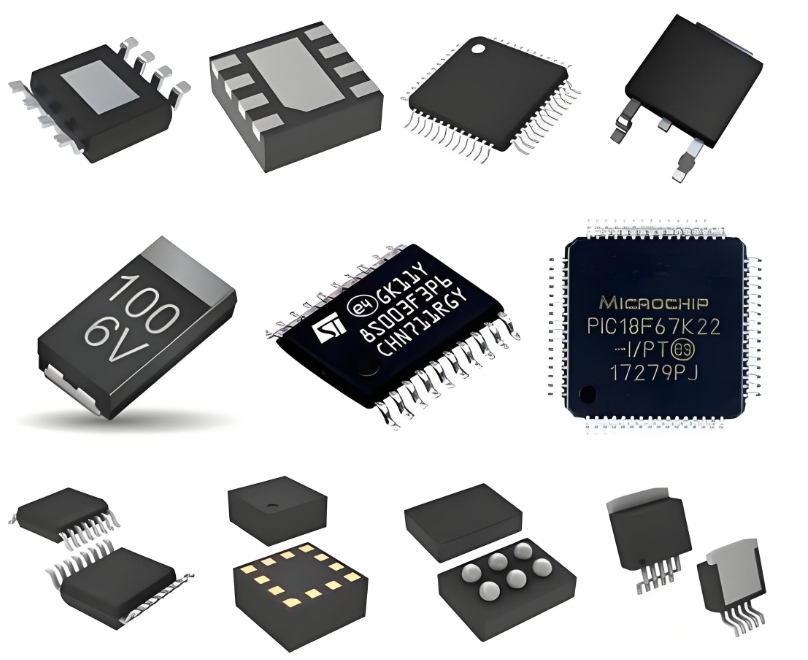
Furthermore, the PEMD3 family is engineered for uncompromising robustness and functional safety. In automotive applications, these chips are designed to meet the stringent ASIL D (Automotive Safety Integrity Level D) standards, the highest classification for functional safety. They feature comprehensive diagnostic and protection functions, including over-current, over-temperature, and under-voltage lockout monitoring. This built-in intelligence allows the system to not only protect itself but also report its status to a central processor, which is essential for autonomous driving systems and safety-critical industrial machinery where predictive maintenance and fault detection are non-negotiable.
The versatility of the PEMD3 platform allows it to serve a wide array of applications. In the automotive sector, it is ideal for driving high-power loads such as electric power steering (EPS) systems, braking actuators, advanced driver-assistance systems (ADAS) sensors, and interior lighting modules. In the industrial sphere, it provides the robust control needed for factory automation, robotic control systems, and high-power AC/DC converters.
NXP's PEMD3 family represents a significant leap forward in power management technology. By masterfully combining high integration, superior efficiency, and ASIL D-grade robustness, it provides a future-proof foundation for the next wave of innovation in electrified transportation and automated industrial systems, empowering engineers to design with greater confidence and simplicity.
Keywords: Power Management, Functional Integration, ASIL D, High Efficiency, System-in-Package (SiP)

